


Dr. Logan Jones, Psy.D. in the Media
Updated December 2025
Featured In


















Dr. Logan Jones, Psy.D., is a licensed clinical psychologist and the founder of Clarity Therapy NYC and Insight Therapy NYC. He is regularly featured in national and international media for his expertise in emotional well-being, relationships, LGBTQ+ mental health, identity, stress, digital behavior, and the psychology of modern life. His commentary appears in NBC, HuffPost, Yahoo, Parade, Well+Good, CNET, LivingEtc, Verywell Mind, MindBodyGreen, Nylon, LGBTQ Nation, and more.
Press Coverage & Expert Commentary by Dr. Logan Jones, Psy.D.
These articles and interviews feature Dr. Logan Jones’s expert commentary on the topics he is most frequently consulted about, including relationships, identity, emotional well-being, anxiety, digital behavior, and the psychological impact of modern life. Each section below includes a brief summary and direct link to the original piece.
Featured contributions by Dr. Logan Jones by topic





Relationships, Dating & Emotional Connection

Dr. Jones explores how subtle texting habits can communicate power dynamics, emotional distance, or passive aggression. He explains how tone is easily distorted over text and why messages that seem neutral to one person may feel minimizing or dismissive to another.
Quotes from Dr. Logan Jones:
“Condescension isn’t just about words but making another person feel small.”
On dismissive replies like “Google it,” he explains: “Few things shut down a conversation faster than this because it’s dismissive and shows that someone’s curiosity isn’t worth your time or energy.”
On accusatory texts like “You always do this,” he notes: “This is hyperbolic, accusatory and a trap… it turns your minor frustration into painting someone as having a character flaw.”
“Saying ‘I told you so’ offers nothing but cheap and quick self-satisfaction at the expense of someone else’s hurt feelings.”
On how to soften tone over text: “A simple ‘haha’ or ‘I see what you mean, smiley face’ can make a big difference.”

The Worst Texting Red Flag (It’s Not Ghosting) - HuffPost & Yahoo News UK
Dr. Jones explains why “patchy texting” can be a more serious dating red flag than ghosting. He highlights how inconsistent communication often signals emotional unavailability, avoidant attachment, or breadcrumbing — patterns that create anxiety, insecurity, and relational instability.
Quotes from Dr. Logan Jones:
“Patchy texting signals… inconsistency, a lack of emotional availability or manipulation.”
“If someone engages intensely and then disappears they may be more interested in the thrill of the connection you offer than the sustainability of actually investing in it.”
“Love generally flows effortlessly when it’s genuine. If you’re doing mental gymnastics or forcing a connection or waiting in anxiety maybe it’s time to release yourself.”

How Long Is Too Long To Wait for a Text Back? - HuffPost & Yahoo
Dr. Jones explains why texting can feel especially triggering for anxiously or avoidantly attached daters, and why the real issue isn’t the number of minutes or hours between messages — but the emotional meaning people assign to the wait. He emphasizes that emotional regulation, clarity, and relational security matter far more than timing alone.
Quotes from Dr. Logan Jones:
“Texting someone you’re dating is one of the riskiest forms of communication for anxiously attached or avoidantly attached people because it’s ripe for projection.”
“The deeper issue here isn’t just texting but about our ability to emotionally regulate ourselves and find relational security.”
“If you’re wondering how long is too long to wait for a text, you may already have your answer. People make time for what matters.”
“There’s more nuance to this than just saying hyperbolic and oversimplified like ‘don’t overthink it’ or ‘they’ll text if they care.’”

Can Your Body Reject a Toxic Relationship? - Well+Good (via The Skimm)
Dr. Jones explains how the body can respond to emotional unsafety in a relationship long before the conscious mind makes sense of it. He describes how the nervous system picks up subtle cues — tone, micro-expressions, and energy shifts — and how chronic stress in an unhealthy partnership can lead to physical symptoms like exhaustion, tension, anxiety, and dissociation.
Quotes from Dr. Logan Jones:
“You might not consciously see the red flags, but your body picks up on tone, micro expressions, and energy shifts in a way that your rational mind can't always explain.”
“If past experiences wired you to associate love with anxiety, your body might react to certain people or the situations they put you in with panic.”
“Rather than label these as random, listen: it's your nervous system detecting that something is out of place.”
“There’s this persistent feeling of spacing out (dissociation) and going numb, due to the emotional energy expended by the body.”

8 Relationship Red Flags You Shouldn’t Ignore - WeddingWire
Dr. Jones outlines key relational warning signs that often indicate deeper emotional or behavioral issues. He explains how cruelty, a lack of reciprocity, jealousy, self-victimization, and unwillingness to grow can erode trust, safety, and emotional connection — and may signal when a relationship is becoming unhealthy.
Quotes from Dr. Logan Jones:
“If you feel like your partner is being unnecessarily and consistently critical without being constructive, then that's a concerning pattern.”
“It's one thing to give loving feedback with the wish that your partner will improve, learn, and grow with you, but it's another issue entirely whenever you're trying to erode their self-confidence.”
“If you sense that your partner isn't making a lot of time for you, doesn’t include you in plans or decision-making, or doesn’t bother to work through disagreements, this may be something to confront.”
“If you've had to remind them many times to consider your needs and how you're feeling, and they seem not to care enough to make that their priority, then that's when you might need to reassess if the relationship is becoming unhealthy.”
“If your partner is wanting you to fail in some way or is actively trying to dim your shine, it may be that your partner is dealing with their own insecurities.”
“This mentality where victims paint the picture that somehow others are the source of all their distress is often diminishing, fearful, paranoid and accusatory.”
“Perhaps they're inflexible, rigid, or maybe they have overly controlling behavior with little insight into how they are contributing to their own or someone else's unhappiness.”

Dr. Jones explains how unresolved heartbreak, attachment wounds, and internal narratives can fuel insecurity in relationships. He emphasizes the value of recognizing personal patterns, validating one's emotional history, and learning to rebuild security through clarity, honesty, and self-awareness.
Quotes from Dr. Logan Jones:
“When untreated, heartbreak festers like a wound and has residual effects.”
“By confronting the multitude of small heartbreaks you’ve endured, you can slowly but surely dissolve the pain and be unburdened.”
“You’re not alone in your heartbreak, and because of this, you’re not alone in being insecure — everyone carries with them some degree of fear of loss or being left.”
“Any self-condemning stories about your relationship history you’re rehearsing in your mind, shame you’re holding onto about past relationship failures or relationship drama you’re recycling from the past are likely keeping you from forming healthy attachments in the present.”
On codependency: “People who wrestle with codependency often look to their partner for validation and a sense of purpose.”
“The more you can affirm within yourself that you are whole and complete just as you are, the less likely you’ll feel insecure and act out your abandonment drama.”
“What you affirm is likely to become true for you.”

Dr. Jones emphasizes the importance of asking meaningful questions early in dating to understand compatibility and long-term intentions. He explains that the quality of someone’s answers can reveal how serious and emotionally aligned they are, helping you determine whether the relationship is genuinely progressing or fundamentally mismatched.
Quotes from Dr. Logan Jones:
“In asking questions, you can assess the quality of the answer.”
“If you’re asking important questions about the future, your wishes and the life you want to create and if you are getting answers that are vague, uninspired, generic or uninformed, you may want to ask yourself, ‘How serious is this person about this?’”
“If the quality seems low, then that’s a time to pause and reflect.”
“The bottom line then becomes about solving this: are we in the same relationship?”
“If you can’t say ‘yes’ or ‘I think so,’ you need to re-evaluate things.”
“You want to be cautious when you wonder if you are in a relationship where you have two different ideas about what you’re doing or where you’re heading, even if it’s a casual fling.”
“If you ask this question and you can’t say ‘yes’ or ‘I think so’, then you need to consider walking away before things get too serious.”
Identity, LGBTQIA+ & Emotional Well-Being

Dr. Jones explains why the holidays can heighten stress, anxiety, and feelings of “otherness” for LGBTQ and non-binary people — especially when returning to environments where their identity hasn’t always been fully accepted. He highlights how childhood memories, microaggressions, and internalized prejudice can resurface during the season, and offers guidance for boundary-setting, emotional safety, and staying connected to supportive communities.
Quotes from Dr. Logan Jones:
“While experiences vary by individual, most of my LGBTQ and non-binary identifying clients report similar feelings of tension and stress during the holiday season.”
“Common struggles range from anxiety and depression, to feelings of rejection for freely expressing their authentic selves.”
“For these clients, going home for the holidays is not always a time of bliss, but a painful reminder of moments of their ‘otherness’ within their families.”
“Any rejection can cause distress, and sadly, statistics show that overtly aggressive statements and behaviors, as well as microaggressions negatively impact the emotional health of the LGBTQ community on a daily basis.”
“When one’s psyche is contaminated by the shadow of prejudice and internalized homophobia, it can result in depression, anxiety, psychological distress and other problems with self-esteem.”
“These distressing feelings and the ‘flashbulb’ memories that are formed in childhood are often unconsciously triggered when returning home for the holidays.”
“I have the right to be me, I have the right to be treated with dignity and respect, I have the right to distance myself from people and places that feel toxic.”
“When insensitive statements or actions cross the line, speak up for yourself.”
“‘Please don’t make comments like that — they’re painful and make me feel unwelcome here.’ A simple statement like this demands respect, establishes gentle, yet firm boundaries, without spreading further toxicity.”
“If you choose to go home for the holidays, inform your friends and allies that you’ll be needing some extra emotional support during this time of the year.”
“Surround yourself with people who make you feel loved and remind you that you’re perfect just the way you are.”

A Pride Playlist: 10 Songs to Change Your Life - LGBTQ Nation
In this bylined feature, Dr. Jones curates a playlist of LGBTQ-affirming songs designed to support emotional strength, self-acceptance, and pride throughout the coming-out journey. He highlights music as a powerful tool for grounding, empowerment, and embracing one’s authentic identity.
Quotes from Dr. Logan Jones:
“These tunes can help you gain emotional strength when coming out and take pride in who you are.”
“The underlying message is that being authentic is something to be admired and loved.”
“This song is the perfect antidote to the attitude that queer people decide to be queer, or that God won’t love us for being gay.”
“The deepest love, the song argues, is not the one you have with a partner, but the one you have with yourself.”
“Love is love is love.”

Why Everyone Wanted to Be Baby Spice - Nylon Magazine
Dr. Jones contributes psychological insight into Baby Spice’s lasting appeal, explaining how her character evokes nostalgia, youthful confidence, and a blend of innocence and allure that resonates across generations. He discusses how these qualities reflect deeper emotional longings and why the coquette archetype can be both intriguing and intoxicating.
Quotes from Dr. Logan Jones:
“Baby Spice reminds us of that zest we may have lost, which is both enticing, and perhaps haunting, depressing, and enviable.”
“That adult envy extends further into our innate desire to possess the ‘healthy narcissism,’ or the self-fulfilling, -assured, -dependent characteristics a child possesses.”
“Look but do not touch; you may want me, but you may not have all of me.”
“This character can be confusing, intriguing, and, most of all, highly intoxicating to many.”
“The less likely you are to need other people, the more people are drawn to your apparent self-confidence and self-fulfillment.”

Dr. Jones explains how recurring exam dreams often draw from stored memories, high-pressure experiences, and both conscious and unconscious fears. He notes that exam dreams aren’t literally about exams and can be approached with curiosity rather than fear, offering insight into underlying stressors and self-expectations.
Quotes from Dr. Logan Jones:
“We make dreams by pulling from powerful memories and our conscious and unconscious emotions, fears, and stressors.”
“A neurological take would be that your hippocampus, which stores memories, especially stressful ones, recalls school as being a hard-wired memory symbolic of high-pressure times.”
“The good news is that these types of dreams about exams are common and it helps to see that they aren’t random.”
“I don’t need to prove anything because I know I’m worthy and lovable just as I am.”

What Exactly Are These Emotions We Are Feeling? Psychologists Explain - Better Magazine
Dr. Jones explains how the pandemic triggered complex emotions—grief, loss, anger, anticipatory anxiety, time distortion, and emotional overwhelm. He highlights how intangible losses, disrupted routines, and a sense of global threat can impact mental health, offering guidance for grief processing, emotional regulation, and reclaiming a sense of control during uncertainty.
Quotes from Dr. Logan Jones:
“Being able to recognize and accept the more intangible losses we face because of this pandemic can be profound.”
“This type of grief is harder for people to identify because there’s no public funeral or formal recognition for what they’re feeling.”
“Until now, things like pandemics always seemed to happen in faraway places with oceans between us.”
“There’s anger with our leadership, or the lack of leadership, the lack of action, and lack of empathy.”
“Anger is often a mask for grief.”
“People are wondering how long the pandemic will last, whether they’ll lose their jobs, if they have enough stashed away in savings, and what will happen if they get sick.”
“Life outside of confinement has also come to a screeching halt with the exception of a few industries, so for many there’s no benchmark or anchor that business and life is carrying on as usual.”
“This experience of our lives essentially being frozen in time and having to wait is very unsettling, and it makes our experience of time nebulous, or mushy.”
Stress, Anxiety & Personal Growth

Dr. Jones offers guidance on breaking out of all-or-nothing thinking and building consistent, self-compassionate exercise habits. He explains why it’s important to focus on cumulative progress rather than perfection and provides affirmations to help reduce anxiety and build a healthier relationship with movement.
Quotes from Dr. Logan Jones:
“It’s easy to fall into the all-or-nothing mindset when it comes to fitness, but the truth is that the benefits you reap from moving your body are cumulative.”
“The work you do will have a positive impact on your health and level of fitness over time, regardless of how short each session may seem.”
Suggested affirmations:
“My body is improving.”
“I’m focusing on my health every day.”
“My fitness is increasing each moment.”
“My health is important to me at this moment.”
“I have the right to develop a healthy body or any type of body that I wish.”
“I’m taking care of my body.”
“I’m a work in progress.”
“I love my body.”
“I trust my body.”
“My body works with me and not against me.”
The Guilt-Free Guide to Breaking Up With Your Therapist - Well+Good
(Original URL unavailable)
Dr. Jones explains why ending therapy can bring up guilt, conflict avoidance, and emotional uncertainty — and why processing these feelings can itself be a meaningful part of growth. He stresses that a good therapist will always respect your autonomy, and that taking breaks from treatment can be healthy and empowering when you’re ready to apply what you’ve learned.
Quotes from Dr. Logan Jones:
“Your exploration can be illuminating and may help you develop a new skill, such as becoming more assertive, communicating authentically, or dealing with confrontation in a healthier manner.”
“Do not let a therapist attempt to coerce you into staying. A good therapist will respect your wishes and support you through the transition and termination.”
“Taking a break from treatment isn’t a bad thing when you are in a good place. The break gives you the opportunity to apply everything that you have learned in therapy to your life.”
How to Keep Your Cool During a Job Interview (Hint: Manifest Success!) - Well+Good
(Original URL unavailable)
Dr. Jones offers simple grounding strategies to help manage anxiety during job interviews. He emphasizes the power of controlled breathing to regulate the body’s stress response and bring attention back to the present moment, helping you stay composed and confident under pressure.
Quotes from Dr. Logan Jones:
“Take calming breaths to combat an awkward smile, sweaty hands, a trembly voice, or butterflies in your stomach.”
“Controlled breathing will help center you on the present.”

Wait a Minute, What If You’re the Toxic Co-Worker? – The Atlanta Journal-Constitution
This article breaks down workplace behaviors that can signal when you might be contributing to a toxic culture. Dr. Jones provides insight into how perfectionism, judgment, and inflated self-expectations can show up as toxic patterns that harm team dynamics.
Quote from Dr. Logan Jones:
“Toxic people tend to look down on other people when they make mistakes while holding themselves in immaculate esteem.”

Dr. Logan Jones: How To Develop Mindfulness And Serenity During Stressful Or Uncertain Times - Authority Magazine / Medium
In this in-depth interview, Dr. Jones reflects on his path as a psychologist and shares practical ways to cultivate mindfulness, resilience, and serenity during periods of crisis and uncertainty. He outlines specific “Serenity Tips” for staying present, using quiet periods to reset, confronting reality to spark systemic change, seeing global interconnectedness, and choosing to evolve rather than return to an unhealthy status quo. He also discusses modeling calm, hope, vulnerability, social responsibility, and small acts of kindness as ways to support others who are feeling anxious.
Quotes from Dr. Logan Jones:
“Have faith we’ll get through this, and that this will possibly change the world for the better. To be clear, it’s not about being in denial about the current situation. However, we must hold onto the idea that there is a blue sky behind this temporary dark cloud.”
“Avoid time traveling and commit yourself to living in the present moment.”
“Ask yourself, ‘What do I need right now to feel okay?’”
“It’s vital to give yourself permission to take a breath and be reflective about your needs during these moments of solitude.”
“Everything I need is already inside of me or exists within me.”
“My movement would be one of radical forgiveness. Radical forgiveness is the idea that we no longer wait to forgive ourselves or others, and we do so fully, without strings attached.”
Digital Behavior & Modern Life

Dr. Jones explains why social media is engineered to be neurologically addictive and why quitting cold turkey rarely solves the underlying problem. He breaks down how platforms use intermittent reinforcement — the same mechanism driving slot machines — and why understanding the emotional function social media serves (escape, avoidance, validation) is key to real change. He emphasizes small, sustainable habit shifts, intentional boundaries, and replacing compulsive scrolling with more life-giving routines.
Quotes from Dr. Logan Jones:
“On a deeper level, these social media companies know exactly what they are doing from a neurological perspective… what they're doing is called intermittent reinforcement. It’s the same with swiping on Tinder or checking your Instagram — the addiction is the reward pathway, it’s a dopamine hit.”
“I think it’s a problem when people start too big. Start somewhere where there’s the least resistance.”
“Addiction is anything you do to escape a feeling that has a life-damaging consequence… the life-damaging consequences of social media addiction are that you are not present and as engaged with life.”
“From a behavioral point of view, doing something for three weeks or at least 21 days will allow you to form a new habit — you really are rewiring a certain part of your brain when you try it.”

Expert Advice on Controlling Your Partner’s Gaming Addiction - OnlineGambling.ca
Dr. Jones explains how video games are intentionally engineered to be neurologically rewarding, creating dopamine-driven cycles that can pull people away from real-life relationships. He highlights how achievement loops, leveling systems, and continuous rewards can make gaming especially consuming — and why this often leads to conflict, emotional disconnection, and reduced quality time for couples. His insight helps partners understand the underlying psychological mechanisms, paving the way for more compassionate communication and healthier boundaries around gaming.
Quotes from Dr. Logan Jones:
“Most games operate on a chemical level, in which hits of dopamine are released into the brain’s reward system when they achieve something in that world.”
“Every time you ‘level up,’ discover a secret prize, or earn a token, it’s a reward.”
Wellness, Lifestyle & Environment

This piece breaks down the psychological tactics that make wellness scammers so convincing — including emotional manipulation, urgency, mimicry, and manufactured authority. Dr. Jones explains how scammers project confidence, exaggerate achievements, and deliberately make people doubt their own intuition, creating fertile ground for exploitation.
Quotes from Dr. Logan Jones:
“Even when stories don’t add up, scammers have the confidence to make you believe that you’re the one who misunderstood them.”
“Scammers like to appear grandiose and tend to exaggerate their accomplishments.”
“Manipulation happens when they try to convince you to override your intuition.”
“Pausing for meditation allows you to connect with your intuition and logically identify inconsistencies from the scammer.”

This feature explores how color influences emotional well-being, clarity, and mood within the home. Dr. Jones explains how certain hues — especially pinks and blues — support calm, balance, and emotional regulation. He emphasizes that “positive colors” aren’t only bold or energetic; they are also the shades that quiet the nervous system, reduce stress, and help people feel grounded and emotionally safe in their spaces.
Quotes from Dr. Logan Jones:
“Positive colors aren’t just about being loud — they’re about creating calm, balance, and expansiveness that invite reflection, relaxation, and emotional depth.”
“Blue is the color of emotional depth, of clear skies, of the rhythmic pull of the ocean. It reminds the nervous system that it’s safe to exhale.”
“Deep navy, soft coastal blues, warm teals, and airy shades bring a sense of ease, openness, and tranquility.”
“These colors are known to lower stress levels and create a feeling of emotional containment, slow our nervous system… and encourage introspection.”
“Neutrals don’t erase personality but create space for it. A soft, warm white creates spaciousness, quiet, and openness.”

This piece explores why time can feel fast, slow, or distorted depending on our emotional and neurological state. Dr. Jones explains how stress, boredom, novelty, and emotional intensity change the “density of human experience,” altering how we perceive the passage of time. He highlights how routine, engagement, and meaningful activity can help time feel smoother and less overwhelming, especially during stressful or uncertain moments.
Quotes from Dr. Logan Jones:
“What’s so fascinating about time is that it’s both objective and subjective… our experience of time can be expansive or constricted depending on our neurological and emotional state.”
“When we’re in danger and reaction time is most important, time seems to slow, giving our minds a chance to strategize.”
“You may not be having fun at work, but you are busy. There are workdays and weeks when you’ll wonder where the time went because you were so engrossed in what’s in front of you.”
“It’s when you’re bored and uninspired that you become more preoccupied with time intervals because there’s nothing else to focus on.”
“The more we perceive something as exciting and rewarding, the more powerful its impact on how quickly we experience the passage of time.”
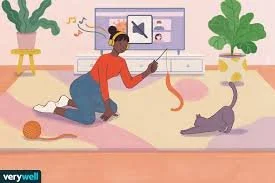
Is Watching the News Bad for Mental Health? - Verywell Mind
This article explores how constant exposure to sensational or negative news can trigger chronic stress, anxiety, sleep disruption, and emotional overwhelm. Dr. Jones explains how modern news cycles are designed to keep viewers hooked through fear-based and addictive patterns of reporting — and why setting boundaries, creating structure, and choosing credible sources are essential for protecting mental well-being.
Quotes from Dr. Logan Jones:
“Unfortunately, a lot of the news we consume today isn’t so much reporting as it is a way of keeping people addicted to the news cycle.”
“Consuming too much of this kind of news, whether actively or passively, can be very toxic, and what you hear has an impact on your mood.”
“A healthy way to approach the news cycle is to rely on outlets you know are credible, have experienced reporters who do their research, and provide balanced perspectives.”
“You probably have set times every day when you eat, and you can do the same with news. Check in with what’s going on in the world by consuming the sources that nourish you, and then move on to something else.”
Recommended mantra: “Toxic disaster reporting has no power over me. I acknowledge what’s happening in the world, but I will not let it define my life. I’m going to persevere and do my part.”
For Journalists & Producers
Dr. Logan Jones is available for interviews, expert commentary, and psychological insights on:
Relationships & emotional communication
LGBTQ+ mental health
Anxiety, depression, stress & emotional regulation
Identity development & life transitions
Tech addiction, social media hygiene, digital boundaries
Toxic relationships, attachment patterns & security
Wellness culture & psychological manipulation
Private practice, therapist development & supervision
Workplace stress & emotional health
Press Contact:
drloganjonesoffice@claritytherapynyc.com
FAQs
-
Dr. Logan Jones is a Manhattan-based licensed clinical psychologist and the founder of Clarity Therapy NYC, Clarity Health + Wellness, and Clarity Cooperative. He has nearly 20 years of experience working with clients, supervising therapists, and building supportive practice environments. In addition to his clinical work, he contributes to national media outlets and writes for Psychology Today, offering clear, relatable commentary on mental health and the realities of private practice.
-
Dr. Jones specializes in anxiety, identity development, emotional overwhelm, perfectionism, grief, life transitions, and supporting high-functioning adults who feel overloaded beneath the surface. He works exclusively with individual adults and provides supervision and consultation to therapists.
-
Dr. Jones is the Founder of Insight Therapy NYC. He collaborates closely with the supervisory team, supports early-career clinicians, and ensures clinical excellence across the insurance-based group practice model.
-
At Clarity Therapy NYC—a boutique, out-of-network psychotherapy practice—Dr. Jones leads the practice, provides clinical guidance, and supports independent practitioners who work with greater autonomy and specialization.
-
Dr. Jones is the Founder and Director of Clarity Health + Wellness. He leads the vision, culture, and community of the space, conducts Discovery Calls with prospective members, and ensures that CHW remains a high-quality, HIPAA-aligned environment for licensed mental health professionals to work, grow, and collaborate.
-
Yes. He provides direct supervision to early-career clinicians at Insight Therapy NYC and offers consultation to specialists and independent practitioners at Clarity Therapy NYC.
-
Yes. Dr. Jones has been featured in NBC, HuffPost, Parade, CNET, MindBodyGreen, Well+Good, Verywell Mind, and more than twenty other major media outlets.
-
He frequently provides expert insights on mental health, anxiety, identity, LGBTQ+ wellbeing, digital behavior, modern relationships, emotional resilience, workplace stress, and the psychological realities of contemporary life.